A2A and the Real Problems of Enterprise Agentic Systems
Enterprises evaluate protocols differently than developers do. Rather than asking "Can this power a demo?", organizations ask "Can this power a platform?" When examining A2A, our team focused on whether it could support genuine production systems.
Key enterprise requirements include:
- Interoperability across different technology stacks
- Ability to understand and replay agent actions
- Secure access to internal systems with policy controls
- Traffic routing without payload inspection
- Streaming partial results without breaking timelines
- Implementation evolution without breaking existing agents
- Multi-agent orchestration patterns
MCP vs. A2A
MCP solved a narrow problem -making internal services accessible to AI with clear inputs, clear outputs, one request, one response. A2A addresses a broader challenge where agents plan, reason, maintain state, and call each other.
Five Key Problems in Production Systems
1. Ambiguous Semantics Break Interoperability
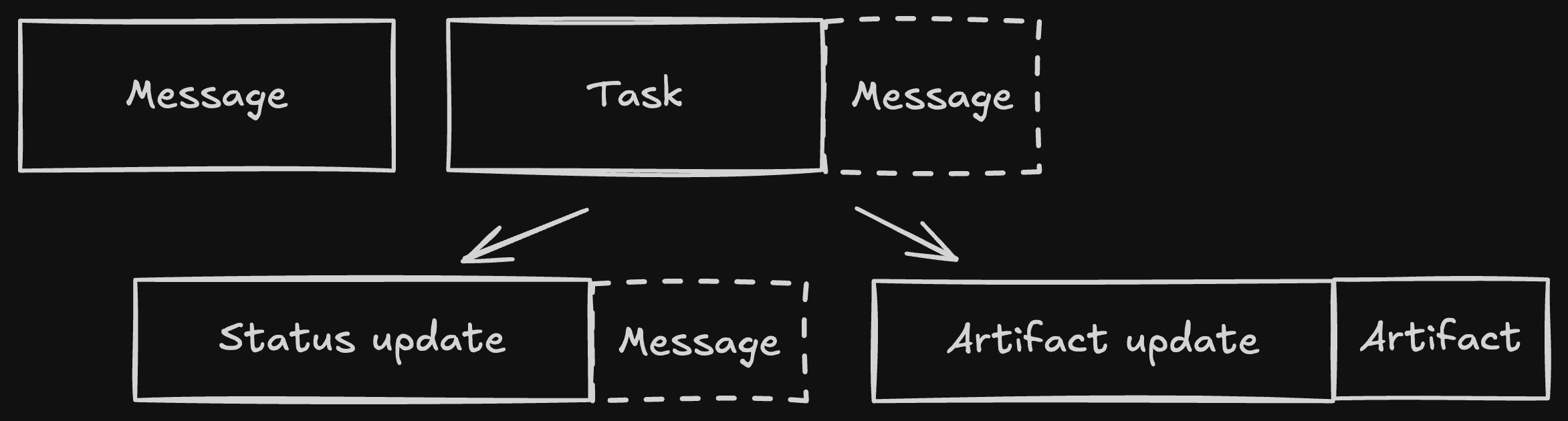
The boundary between Message and Artifact in A2A lacks clarity. When semantics remain undefined, implementations drift. SDKs try to support every variation, and interoperability suffers. Streaming exposes this further -developers use Artifact updates for content that isn't actually artifacts.
2. JSON-RPC Doesn't Fit Enterprise Routing
JSON-RPC embeds routing metadata in payloads, but enterprises require metadata in headers. Inspecting bodies is expensive, slow, and often impossible. Duplicating metadata creates synchronization risks.
3. Extensions Create Dialects
While extensions prove useful, they fragment the protocol. When teams depend on different extensions, they are no longer speaking the same protocol. They are speaking local variants.
4. Lack of Strong Opinions
A2A exposes implementation details without clear guidance. Ambiguities include:
- Whether multi-turn conversations represent one long-running Task or multiple Tasks
- When Tasks are truly "completed"
- Message versus Artifact classification
- Whether artifacts stream after task completion
5. Early Adoption Around Simple Use Cases
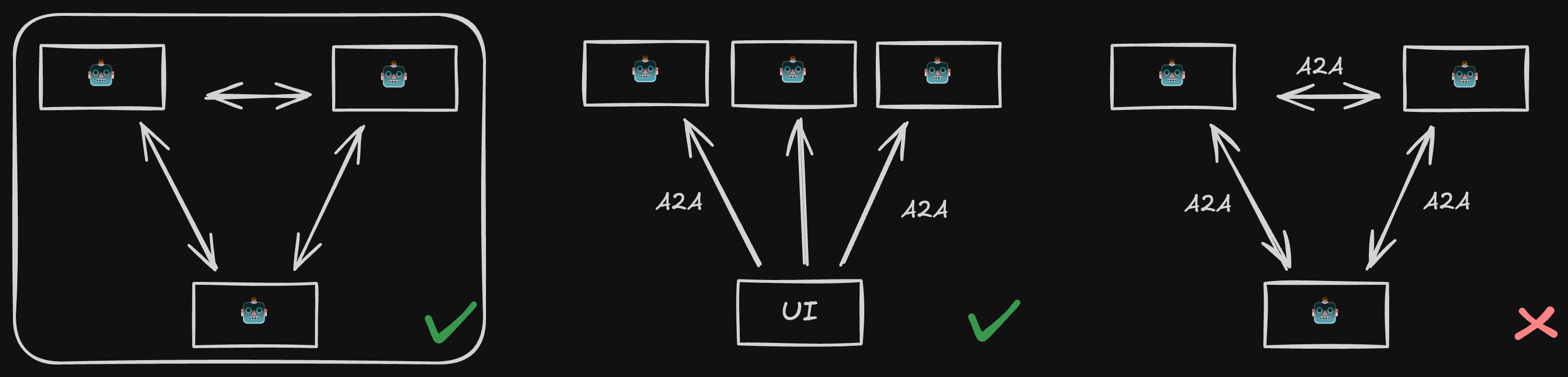
Most organizations currently run single agents, small clusters in shared runtimes, or use A2A for standardizing UIs. This creates risk that A2A hardens around early, non-representative use cases.
Recommendations for Platform Teams
- Choose one semantic model and maintain consistency
- Treat A2A as maturing infrastructure requiring flexibility
- Use A2A where beneficial, not universally
- Recognize that complexity stems from distributed systems challenges, not the protocol itself